
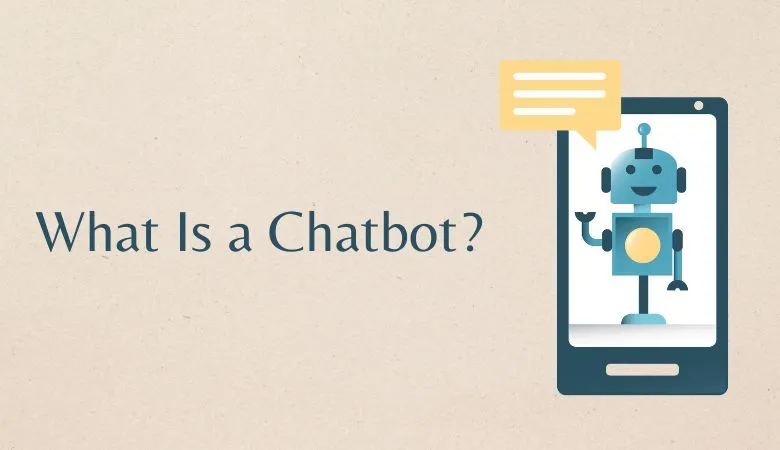
A chatbot is software that allows you to communicate with a computer system through text or voice. You can find chatbots on websites, mobile apps, messaging platforms, customer service portals, and other digital services.
Older chatbots mainly followed fixed scripts and predefined rules. However, modern AI based systems can understand natural language, maintain context, generate responses, and perform tasks. Some can also connect with business databases, knowledge bases, and other software.
As a result, chatbots have evolved to be useful for customer support, sales, marketing, education, internal business operations, and many other routine tasks.
What Is a Chatbot?
A chatbot is a software application designed to communicate with people through a conversational interface. It can answer questions, give information, guide users through a process, or help complete specialized tasks.
Not every chatbot uses artificial intelligence. A traditional chatbot may follow a fixed decision tree where your answer determines the next available option. For example, a customer support bot may ask whether you need help with an order, payment, or delivery. Based on your selection, it gives you the relevant information.
AI chatbots work differently. They can use natural language processing, machine learning, and large language models to understand a wider range of questions and produce responses that are not limited to a fixed script.
For example, instead of selecting “order status” from a menu, you could type the following:
“I ordered my headphones three days ago. Can you tell me when they will arrive?”
An AI powered system can detect that you are asking about delivery and may retrieve the relevant order information if it has access to your company’s order system.
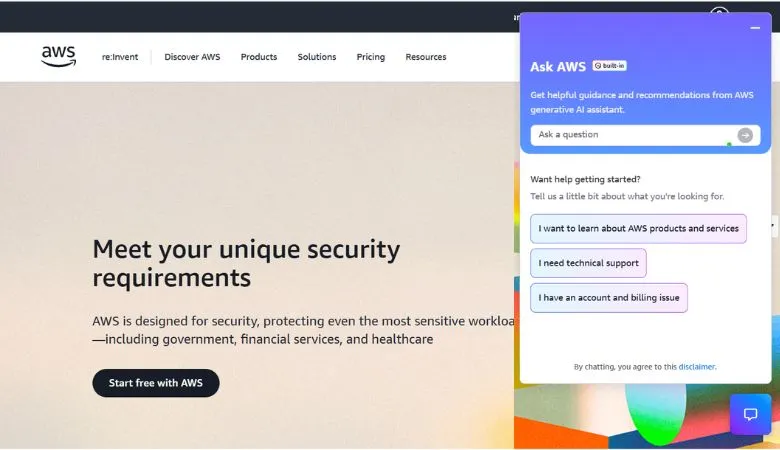
Below, you can find screenshots of the AWS Amazon website chatbot. an example:
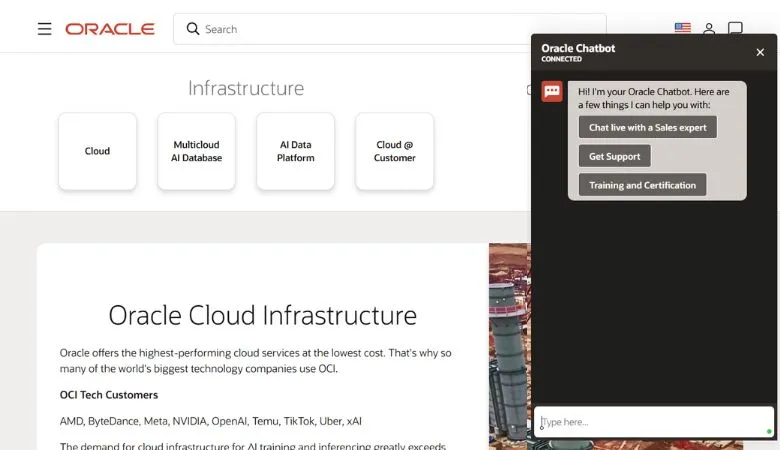
Here is another example, the Oracle chatbot screenshot, to help you better understand how big companies use chatbots on their websites:
How Chatbots Have Changed in 2026
The technology has changed much from the early rule based systems.
Traditional systems were mostly designed around predefined questions and answers. They worked well when users followed the expected conversation path, but they could become stuck when a question was phrased differently or when the user asked something outside the programmed flow.
Modern conversational AI can process natural language and handle more flexible conversations. Many systems now use large language models, which can generate responses based on the information and instructions provided to them.
This does not mean every modern chatbot is automatically accurate. The quality of its answers depends on the model, the information it can access, its instructions, integrations, and how it has been tested.
Types of Chatbots in 2026
There are many ways to classify chatbots. The most useful approach is to look at how they understand requests and generate responses.
1. Rule Based Chatbots
Rule based chatbots work according to predefined instructions.
For example, a website may present these options:
- Track an order
- Request a refund
- Contact customer support
When you select an option, the system follows the corresponding conversation path.
These systems are useful for easy and regular tasks because their behaviour can be controlled easily. However, they are less flexible when users ask random questions.
2. AI Powered Chatbots
AI powered chatbots use technologies such as natural language processing, machine learning, and large language models to understand user queries.
Instead of requiring you to use an exact phrase, the system can often understand different ways of asking the same question.
For example:
“How much does your premium plan cost?”
“What is the price of the premium package?”
“Tell me the cost of the premium plan.”
A capable system can identify that all three questions have a similar purpose.
3. Generative AI Chatbots
Generative AI has taken conversational systems further because responses can be created in real time rather than selected only from a fixed list.
These systems can generate text, summarize information, answer questions, explain concepts, and assist with tasks. Generative AI is powered by machine learning models that learn patterns from large amounts of data and generate new content based on user instructions.
However, generated answers should still be checked when accuracy is important. AI systems can produce incorrect or misleading information, so businesses should use appropriate testing, monitoring, and human oversight. NIST highlights the importance of monitoring AI systems after deployment because unexpected outputs and performance problems can appear in real world use.
4. Voice Based Chatbots
Some conversational systems accept voice rather than typed messages.
For example, you can speak a question and receive a spoken response. Voice based systems generally involve technologies such as speech recognition, natural language processing, and text to speech.
This makes conversational interfaces useful for mobile applications, call centers, smart devices, and other situations where typing is inconvenient. Google Cloud lists speech recognition, text to speech, chatbots, and virtual assistants as applications of conversational AI.
How Does a Chatbot Work?
Although the technology can be complicated, you can understand the simple process in a few steps.
1. You Send a Message
You type or speak a question into a website, application, messaging platform, or voice interface.
For example:
“Can I change my delivery address?”
2. The System Understands Your Request
The chatbot processes your message to figure out its meaning and purpose.
This is where technologies such as natural language processing and natural language understanding can be used. The system may identify important information such as the user’s intent, product name, account information, or requested action.
3. It Finds Relevant Information
The system may use its programmed knowledge, business database, knowledge base, or connected applications to find information related to your request.
For example, a customer service system could check an order database before answering your delivery question.
4. It Creates or Selects a Response
A traditional system may choose a response that was previously written by a developer.
An AI powered system can generate a response based on the conversation, instructions, and available information.
5. It Completes an Action When Connected to Other Systems
Modern conversational systems can do more than answer questions.
When correctly integrated with other software, they can help users complete tasks such as checking an order, booking an appointment, updating information, or creating a support request.
This is an important difference between a basic question and answer bot and a more advanced conversational system.
What Are the Benefits of Chatbots?
Chatbots can provide several benefits for both businesses and users.
1. 24/7 Customer Support
A chatbot can offer assistance outside normal business hours. Customers do not always contact a company during office hours, so automated support can answer common questions at any time.
For example, a customer might ask about shipping, return policies, or account access late at night and receive an immediate response.
2. Faster Responses
Customers usually do not want to wait for a simple answer.
A chatbot can respond to common questions immediately. This can reduce the amount of time users spend waiting for basic information.
Google Cloud identifies automation, improved productivity, and continuous customer availability among the possible benefits of conversational AI.
3. Handling Repetitive Questions
Customer service teams often receive the same questions repeatedly.
A chatbot can respond to common requests such as the following:
- Order tracking
- Delivery information
- Password assistance
- Product information
- Return policies
- Frequently asked questions
This allows human employees to focus more time on complicated cases that require judgment or personal assistance.
4. Supporting Employees
Chatbots are not limited to customer service.
Businesses can use internal conversational systems to help employees find information, understand company policies, locate documents, or complete routine tasks.
Enterprise chatbots are increasingly being used to support both customers and employees by connecting conversational AI with company information, applications, and workflows.
5. Supporting Multiple Conversations
An automated system can manage many conversations at the same time. This can be useful for businesses that receive a large number of similar questions.
However, this should not be confused with unlimited capability. System capacity, infrastructure, model limits, and the quality of integrations can affect performance.
Where Are Chatbots Used?
You may already interact with conversational systems without thinking about the technology behind them.
Common examples include:
1. E Commerce
Online stores can use conversational systems to help customers find products, check orders, understand delivery options, and answer product questions.
2. Banking and Financial Services
Banks can use them for common customer requests, account information, transaction guidance, and support.
Because financial information can be sensitive, stronger security and authentication controls are required.
3. Healthcare
Healthcare organizations can use conversational systems for general information, appointment assistance, and administrative support.
However, users should not assume that an AI response is a medical diagnosis. Sensitive or high risk decisions require appropriate professional oversight.
4. Education
Students can use AI based conversational tools for explanations, practice questions, research assistance, and learning support.
Teachers and educational institutions can also use them to provide automated assistance for routine questions.
5. Customer Service
Customer support remains one of the most common applications. A system can answer frequently asked questions and transfer more complicated conversations to a human agent when necessary.
Chatbot vs AI Chatbot
The terms are sometimes used interchangeably, but there is an important difference.
A traditional chatbot normally follows predefined rules, scripts, or conversation flows. An AI chatbot can use technologies such as machine learning, natural language processing, and large language models to understand and respond to a broader range of requests.
For example, imagine a delivery company.
A traditional system might ask:
“Select 1 for order tracking.”
An AI powered system may allow you to write:
“My package has not arrived yet. Can you check where it is?”
The second approach gives you a more natural way to communicate
Are Chatbots Always Correct?
No. This is one of the most important points to understand before relying on an AI powered conversational system.
A chatbot can misunderstand your question, use incomplete information, or generate an incorrect answer. Generative AI systems can also produce plausible sounding information that is not correct.
NIST has highlighted risks involving generative AI systems, including inaccurate outputs, security concerns, and other issues that need to be managed throughout the AI lifecycle.
Therefore, businesses should not simply launch an AI system and leave it unattended. Testing, monitoring, security controls, data protection, and human review are important, especially when the system handles sensitive information or important decisions.
Do Chatbots Replace Human Employees?
Not necessarily.
A better way to look at the technology is that it can automate suitable tasks while allowing human employees to handle situations that require judgment, empathy, or specialist knowledge.
For example, a chatbot can answer a simple question about a return policy. However, a customer with a complicated complaint may still need to communicate with a human support representative.
The most efficient setup is often a combination of automation and human support. The automated system handles routine requests, while difficult or sensitive cases are transferred to the appropriate person.
What Is the Future of Chatbots?
Chatbots are moving beyond simple question and answer systems.
Modern conversational AI can connect with company data, software applications, and business workflows. At the same time, AI agents are being developed to perform multi step tasks with higher levels of independence.
This means future systems may not just tell you what to do. When they have the right permissions and integrations, they may also be able to take actions on your behalf.
However, greater automation also creates greater responsibility. NIST’s 2026 work on AI agent security points to new risks that can appear as AI systems gain more autonomy and access to tools.
For this reason, security, permissions, monitoring, and human supervision will continue to be important as conversational AI develops.
A chatbot is no longer limited to a simple automated question and answer box. The technology has developed from rule based conversation flows into systems that can understand natural language, generate responses, and, when correctly connected, interact with business tools and data.