
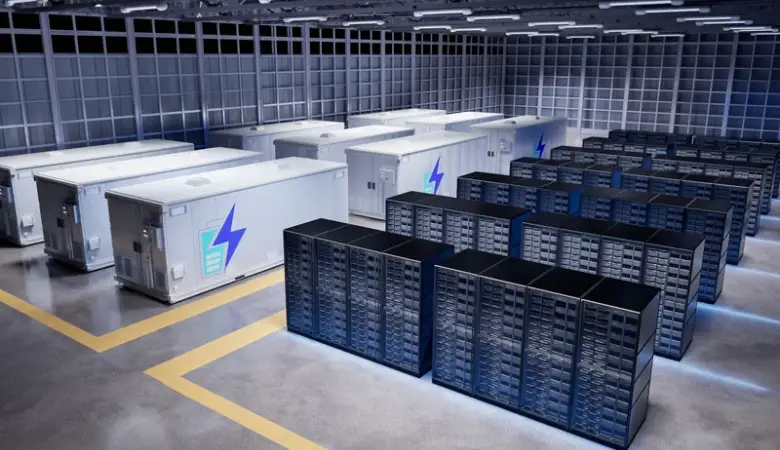
Data centers challenges have changed over the years, and recently the rise of artificial intelligence (AI) has increased the demands on data centers. In order to support growing workloads and larger storage needs, data centers must house increasingly powerful servers.
As demands for data continue to increase, operators face higher costs for energy and data center cooling, more frequent failures of data center equipment and a shrinking talent pool of qualified workers.
5 Major Challenges Data Center Service Providers Face
Let’s look at five major issues affecting data centres and how operators can manage them.
1. Power Supply and Cooling Problems
According to Uptime Institute’s 2026 outage report, power continues to be the greatest risk and cause of large outage impacts. However, the nature of the risk is changing.
Why? Data centers are using more and more electricity each year. Compounding the problem is the fact that, in order to maintain performance, data center equipment must be kept cool.
Traditional air-cooling systems may not adequately remove the heat produced by high density AI systems and other processors. Therefore, more and more facilities are implementing liquid cooling systems to remove heat from the data center.
According to the IEA, electricity consumed by data centers grew by 17% in 2025, while global electricity demand grew by just 3%. Data center development for AI grew by 50% during the same period.
The IEA projects that by 2030 data center electricity consumption will reach 950 TWh, which is approximately 3% of the world’s total electricity consumption.
Because of the increased demand for data center electricity and the rapid development of AI data centers, the development of new facilities will need to keep pace.
2. Hardware Upgrades
The performance of a data center is highly dependent on the hardware used in the servers. With increasing workloads, operators are required to invest in more powerful servers.
The cost of purchasing and replacing servers has increased dramatically in recent years. Especially with the increasing use of artificial intelligence and other advanced workloads, data centers are required to use more powerful hardware.
Although new hardware may be required to support more demanding workloads, replacing servers too often is not wise either. Older servers may still be capable of running less intensive workloads. In such cases, operators should evaluate performance and energy consumption of the servers before opting for an upgrade.
Hardware supply is another challenge. Demand for the latest and more powerful processors, memory and power supplies can increase lead times and disruptions in the supply of hardware. Furthermore, with fluctuating prices of raw materials, it may not always be possible to source all the components required to assemble new servers in a timely fashion.
3. Skilled Staff
This has only become more difficult. Keeping staff is just as hard. Nearly two-thirds of operators in Uptime’s 2025 survey said they have had staffing retention issues and/or employee shortages. Many of their employees are being hired by other data center companies.
My analysis: Staff shortages and outages are related. When an engineer leaves, the process documentation they created is not used. Staffing is a reliability concern as much as it is an HR concern.
When considering providers, find out how long their employees stay with the company. Long-term employees often mean long-term customers.
Not enough trained employees could negatively impact a data center’s day-to-day activities, like increasing equipment repair and maintenance times.
New staff members take time to train on a facility’s operations, increasing the chance of human error outages.
4. Higher Downtime Costs and Service Failures

One of the bigger risks to a data center is downtime. Outages can affect websites, online payments, cloud services, and applications used by a business.
There are real world effects of server outages. Consider the example of a busy online store where customers during peak shopping hours are trying to make purchases on a failed server, resulting in lost sales. What about the impact on a bank if its servers go down? Customers would be unable to use the bank’s online services.
Uptime Institute’s most recent survey shows that the number of data center operators that have experienced impactful outages has continued to decrease. Still, about 10% of outages are still considered serious or severe. The cost of outages is increasing.
There are many impacts of an outage that are beyond lost sales. A business may also face customer complaints, penalties for not meeting service level agreements, expenses for data recovery, and permanent loss of customer trust.
5. Environmental Tracking Is Improving Slowly
Progress is being made on sustainability reporting. More data centers are now collecting sustainability data, and more than half track water use. Only a small minority are tracking carbon.
Many expect new rules to come into effect with respect to tracking and reporting carbon emissions.
Significant improvements in energy efficiency have been slow to materialize. Uptime reported only minor year over year improvements in average Power Usage Effectiveness (PUE), with older facilities pulling the average down.
On the bright side, large hosting companies are signing agreements to purchase large quantities of clean energy. The IEA reports that in the first half of 2026, these companies entered into 45 TWh of power purchase agreements, representing a 20% increase from the same period the year prior.
Green hosting is important to many. Ask your provider for PUE, water usage and carbon figures.
On top of PUE, ask for water and carbon data as well. These numbers are valuable when trying to evaluate a hosting provider’s commitment to sustainability.
The biggest data center challenges are power, rising outage costs, staff shortages, hardware choices, and environmental reporting. Fewer outages happen now, yet each one hurts more.