
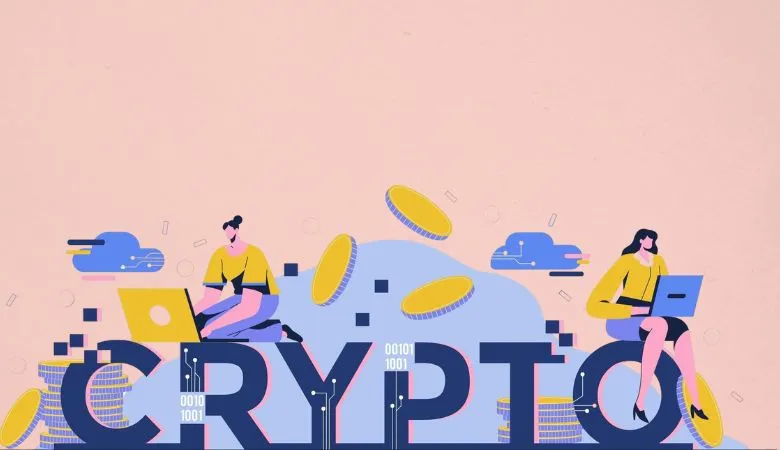
Money in India usually comes with a sense of choreography. Forms are signed, offices are visited, and someone official eventually nods. Crypto ignores all of that. It sits on a screen and waits. This is partly why it unsettles people and partly why it attracts them. There is no counter to lean on and no authority to reassure you that everything will be fine.
Yet buying crypto in India is no longer unusual or underground. After the Supreme Court set aside the Reserve Bank of India banking restriction in 2020, the market reopened and matured. By 2024, India ranked among the largest crypto-using countries by adoption and transaction activity, with tens of millions of users participating in digital asset markets.
Digital Ownership Rather Than Digital Cash
Crypto is not issued by the government, and it is not backed by a physical asset. It is a digital record of ownership secured by cryptography and maintained on a public ledger called a blockchain. This ledger is shared across thousands of computers globally, which is why no single institution controls it.
When people search for clarity on how to buy crypto in India, they are often reacting to unfamiliar language rather than an unfamiliar process, with platforms like Binance frequently referenced as points of orientation. The steps resemble buying shares online. The difference is psychological. Crypto feels untethered, and that can be unsettling in a country where financial life is usually supervised.
Where Indians Actually Buy Crypto
The majority of cryptocurrency purchases in India occur through exchanges. This allows the matching of buyers and sellers of cryptocurrency, as well as the interface that makes the cryptocurrency seem so manageable. There exist some Indian exchanges as well as international exchanges that operate in accordance with the Indian rules of compliance.
The volumes lightened following the imposition of strict taxation laws but rose after 2024 as traders adapted to the taxation regulations and became discerning about their investments. The volumes were continuing to go up in spite of reduced online speculation mania.
Verification and Return of Paperwork
But prior to buying cryptocurrencies from such a platform, one must necessarily go through a KYC verification. This involves giving details regarding PAN and address. This comes across as intrusive for something that was known as liberating, but it appears to convey a message that cryptocurrencies in India work alongside such existing systems.
Verification protects exchanges from fraud and brings transactions into regulatory visibility. Without it, legal access to most platforms is not possible. This step alone removes much of the mystery and replaces it with something recognisably bureaucratic.
Placing the First Order
Once rupees are deposited using UPI or bank transfer, buying crypto becomes a matter of choosing an asset and confirming a trade. The exchange executes the order and credits the crypto to your account. There is no waiting period and no settlement delay.
The complication arrives after the purchase. Crypto prices move quickly. Bitcoin has experienced frequent daily swings of more than five percent in recent years, sometimes within hours. This volatility makes crypto less like a savings product and more like a speculative instrument.
Understanding Order Types
Market orders buy instantly at the prevailing price. Limit orders wait until a chosen price is reached. The first favours speed. The second favours discipline. Neither protects against sudden market drops.
For Indian buyers accustomed to fixed deposits or recurring investments, this can feel jarring. Crypto demands attention and tolerance for uncertainty. It rewards patience rather than urgency.
Don’t Forget Your Taxes
Crypto profits in India are taxed at 30 percent with no adjustment for losses. In addition, a one percent tax deducted at the source applies to transactions. These rules are designed to ensure traceability rather than encourage participation.
Every trade leaves a record. Exchanges report activity. Crypto may be decentralised at a technical level, but taxation is not optional. This reality often changes how frequently people trade.
Where Your Crypto Sits
Crypto bought on an exchange usually stays there in an exchange wallet. This is easy and familiar but requires trust in the platform. If access is disrupted, retrieval can become difficult.
Some users transfer crypto to personal wallets, which provide direct control through private keys. This removes intermediaries but adds risk. Lose the keys, and the crypto is gone permanently. Exchange failures and custody risks have been well documented globally.
Why Interest Hasn’t Faded
Despite volatility and taxation, crypto buying continues. Institutional acceptance abroad has shifted perceptions quietly. Richard Teng, CEO of Binance, has noted that global adoption often starts ‘with a single domino. ‘Now that crypto is being recognized as a legitimate financial instrument within one of the world’s largest retirement systems, the question is no longer what but when. As in when will it happen?
Yi He, the co-founder of Binance, has described the change as incremental, saying crypto is not just the future of finance but rather is already ‘reshaping the system one day at a time. ‘The reshaping is administrative rather than headline-grabbing.
What Buying Crypto in India Really Requires
Buying crypto in India is a financial choice that sits somewhere between curiosity and caution. The steps are straightforward. However, the consequences for a misstep demand attention.
For those considering it, the sensible approach is modesty. Start small, understand the rules, accept volatility, and keep records. Haste isn’t your friend in the world of crypto. It rewards those willing to proceed slowly in a system that never stops moving.