
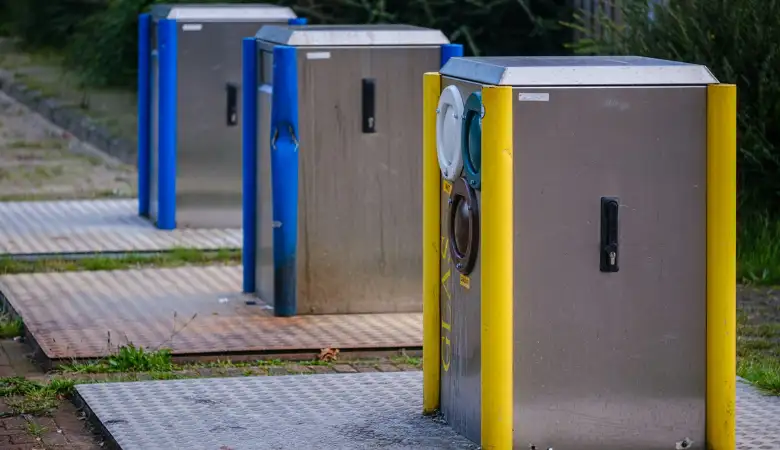
Waste collection doesn’t usually come to mind when people talk about smart cities. The conversation normally goes straight to connected traffic lights, smart buildings, AI and automated transport. But waste and sanitation are also becoming part of that connected infrastructure.
Cities and large businesses now have access to sensors, connected devices and data systems that can show what’s happening across their waste networks in real time. That changes a basic question from “When should the truck come?” to “Does the truck actually need to come right now?” That difference can save time, money and a surprising amount of fuel.
Smart Bins Know When They Need Emptying
A traditional waste collection schedule is fairly simple. A truck comes on Monday, Wednesday and Friday, regardless of whether the bin is nearly empty or completely full. It works, but it’s not particularly efficient.
Smart bins use sensors to monitor how much waste is actually inside them. Once the fill level reaches a certain point, that information can be sent to a central system. Collection teams can then see which locations need attention instead of relying entirely on a fixed timetable. For a large office building, shopping centre or university campus, this can be useful very quickly.
Waste doesn’t always build up at the same rate. A food court may be much busier over a weekend. An office building might produce more waste during certain days of the week. Once those patterns are visible, collection schedules can be adjusted around real usage rather than assumptions.
Better Data Means Better Routes
The sensors themselves are only one part of the system. The more interesting part is what happens to all that data afterwards. Collection software can take information from bins and combine it with vehicle locations, traffic conditions, historical waste levels and other operational information. From there, routes can be adjusted based on what actually needs collecting. That means a truck doesn’t necessarily have to follow the same route every day.
It can go where the demand is. This is already relevant for businesses managing several buildings or facilities. Data analytics tools can help shopping centres and office towers predict collection requirements based on their normal usage patterns. That can cover everyday waste as well as specialist services such as offensive waste disposal, making collection planning less reactive. It’s a fairly simple idea, but when applied across hundreds or thousands of locations, the savings can add up.
IoT Is Also Changing Maintenance
Smart sanitation isn’t limited to bins and collection trucks. A lot of the infrastructure involved in waste and wastewater management is hidden underground or inside treatment facilities. Pumps, pipes and treatment equipment can develop problems long before someone notices an obvious failure. Sensors can help pick up those early warning signs.
For example, equipment can be monitored for changes in vibration, temperature or pressure. If the readings start moving outside normal ranges, maintenance teams can investigate before the equipment fails completely. That’s the basic idea behind predictive maintenance. Instead of waiting for a pump to break and dealing with an emergency, operators have a chance to deal with the problem earlier. It’s usually cheaper, less disruptive and easier to plan.
The Data Needs to Work Together
There’s one problem with adding technology everywhere: having more data doesn’t automatically mean having better information. A city could have smart bins, connected vehicles, wastewater sensors and several different software platforms, but if none of those systems communicate with each other, the overall picture is still fragmented. This is why integration matters.
The International Telecommunication Union has been working on frameworks around IoT and smart sustainable cities, including ways of bringing data from different devices and systems together for better decision-making. For waste management, that could mean combining information from collection vehicles, sensors, geographic systems and treatment facilities in one place.
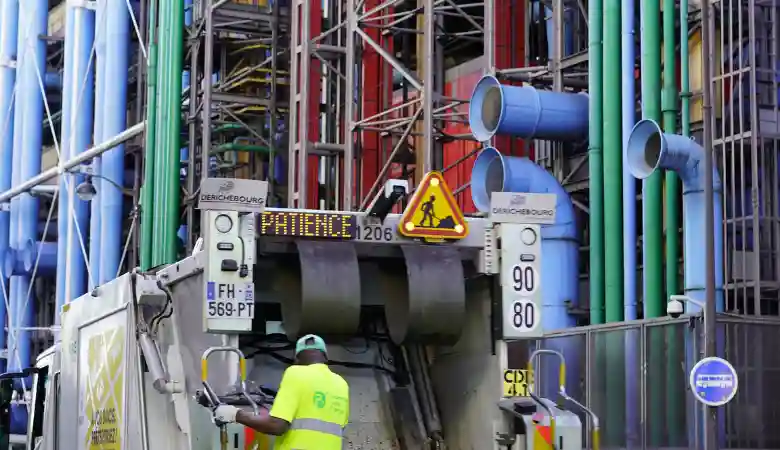
Once the data is connected, patterns become easier to spot. A particular area might consistently produce more waste than expected. Certain routes might regularly experience delays. A piece of equipment might show the same warning signs before every breakdown. Those are not just statistics. They’re useful information for deciding what needs to change.
There Is a Public Health Side Too
The benefits aren’t only financial. Waste that sits around too long can attract pests, create unpleasant smells and make public spaces harder to manage. Sanitation failures can become much more serious when they involve wastewater or other infrastructure.
Better monitoring helps operators respond before small problems turn into bigger ones. The United Nations Environment Programme has also highlighted digital tools as part of modern waste-management systems, including applications for route optimisation, vehicle tracking and monitoring different stages of the waste process. And the pressure isn’t going away. UNEP estimates that global municipal solid waste generation could rise from around 2.1 billion tonnes in 2023 to 3.8 billion tonnes by 2050. That’s a lot of waste to manage with systems that still depend heavily on fixed schedules and manual processes.
What Smart Waste Systems Could Look Like Next?
The next step is likely to be less about individual “smart” devices and more about connecting everything. IoT sensors can collect the information. AI can identify patterns. Data platforms can bring everything together. Predictive systems can flag potential problems before they happen. But none of that works particularly well without good underlying processes.
A sensor cannot fix a poor collection system on its own. An AI model cannot compensate for inaccurate data. And another dashboard isn’t useful if nobody is actually looking at it. The real opportunity is to make waste and sanitation systems more responsive without making them unnecessarily complicated.
For cities and businesses dealing with growing waste volumes, rising operating costs and increasing environmental expectations, that’s probably where smart infrastructure has the most practical value: using better information to make ordinary systems work a little smarter.